
Solar Distribution FAQs
Straight answers for installers, EPCs and developers on ordering, freight, net terms, surplus equipment, FEOC paperwork and the 2026 tariff changes. Need a person? Call (888) 805-3360.
Browse by topic

Ordering and Quotes
How to get pricing, what a quote includes, and how fast it comes back.
How do I get a quote for solar equipment?
Browse the live inventory, click Add to Quote on each item, set your quantities, and submit your quote request. If you already have a bill of materials, email it to sales@alchemysolardistribution.com or call (888) 805-3360 and a procurement specialist will price the whole list.
How fast will I get pricing back?
In-stock quotes usually come back fast, often the same business day. Mixed loads, utility-scale quantities or hard-to-find models can take longer because we confirm availability with the source before we commit a price. We would rather quote you a day later than quote you stock that is not there.
Who do you sell to?
Solar professionals: installers, EPCs, commercial and community solar developers, utilities and independent power producers, and resellers. We are a B2B distributor and do not sell retail kits to homeowners. See who we are for the team behind your orders.
Is there a minimum order?
Modules price best by the full pallet, and most panel SKUs ship that way. Inverters, racking and balance-of-system parts can usually be ordered in smaller quantities. If you need less than a pallet of a specific module, ask your procurement specialist; it depends on the SKU and where it ships from.
Can you source a model that is not listed in your inventory?
Yes. A lot of what we move never hits the website. We work with manufacturers and a nationwide network of distributors and project owners, so send us the exact model, wattage and quantity and we will tell you where it is, what it costs and when it can ship. Contact the procurement team.
Do your quotes include freight and tax?
Your quote lists product pricing and, once we have your ship-to address and delivery requirements, a freight line. Sales tax depends on your ship-to state and whether you provide a valid resale or exemption certificate. Ask for a delivered price if you want one number to compare.
Panels, Inverters and Racking
What we carry, what Tier 1 actually means, and how to pick the right module.
What brands do you carry?
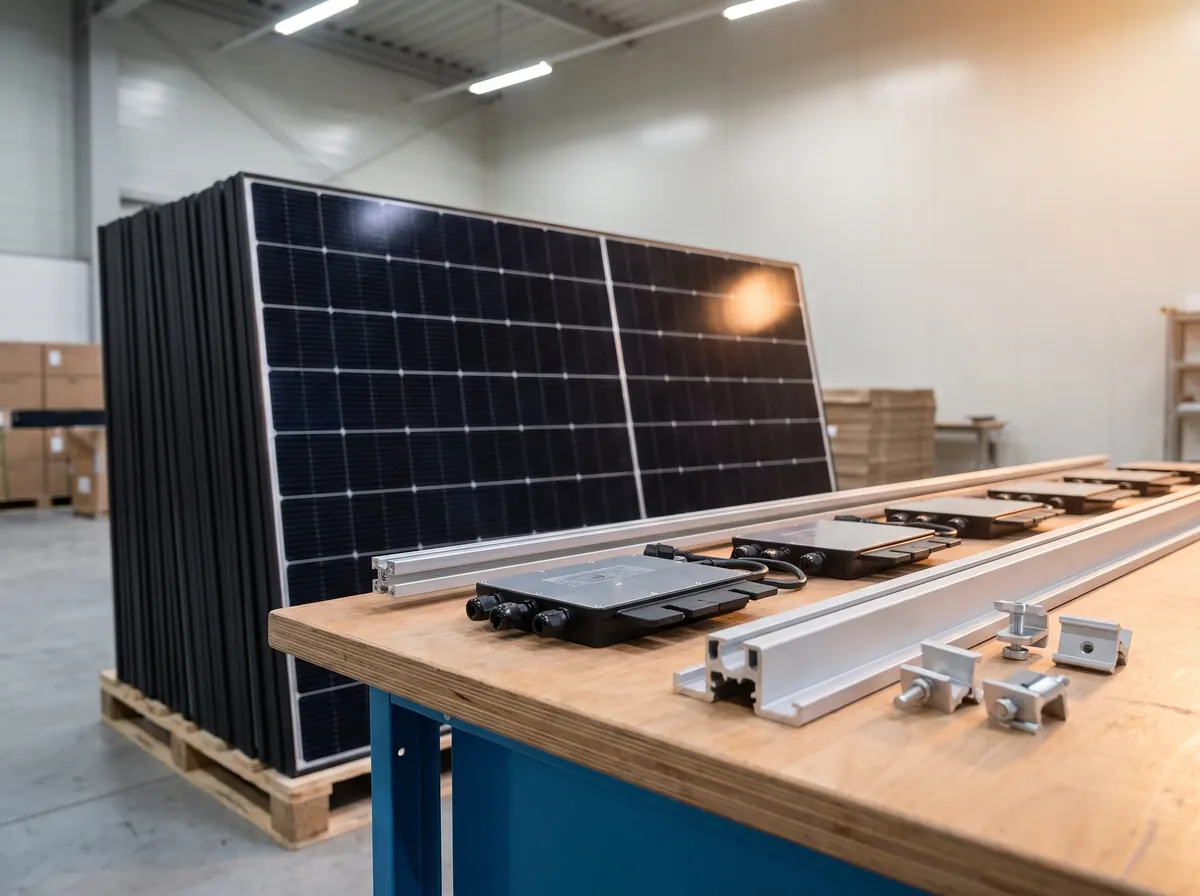
We are brand-agnostic. Recent inventory includes modules from Qcells, Canadian Solar, JA Solar, Jinko, LONGi, Trina, Astronergy, Runergy, Seraphim, ZNShine, Heliene, REC, Hyundai, Philadelphia Solar, Solarever and First Solar; Enphase and SolarEdge inverters; Tesla Powerwall 3; and Chiko USA racking. Stock changes weekly, so check the current inventory or call for anything not listed.
What does Tier 1 mean for solar panels?
Tier 1 is a BloombergNEF list of manufacturers whose modules have been financed by multiple banks on large projects. It is a bankability ranking, not a quality score or a product certification. It matters most to developers and lenders. For an installer, the datasheet, warranty terms and UL listing matter more than the label.
Do you sell bifacial and TOPCon (N-type) modules?
Yes. Our panel inventory includes monofacial and bifacial modules, including N-type TOPCon products, from roughly 400W residential sizes up to 700W-plus commercial and utility formats. Bifacial modules earn their rear-side gain on ground mounts, carports and elevated racking over reflective surfaces; on a flush-mounted roof the gain is minimal.
Which Enphase microinverters do you stock?
Do you carry racking and balance-of-system components?
Yes. We supply racking including Chiko USA systems by the container, plus inverters, combiner boxes and other balance-of-system parts. Send your full BOM and we will quote it as one order so everything lands together.
Do you provide spec sheets and certifications?
Yes. We provide manufacturer datasheets, installation manuals, warranty documents and UL listings for what we sell, so your permit package and AHJ review do not stall. If a document is missing from a product page, ask and we will send it with your quote.

Shipping and Logistics
Where we ship, how pallets travel, and what to do when a delivery arrives.
Do you ship nationwide?
Yes. We coordinate delivery to all 50 states, either to your warehouse or directly to the job site staging area. Lead time depends on where the product sits today, so every quote states the ship-from location and an estimated delivery window.
How many solar panels come on a pallet?
It depends on the module size. Pallets of residential-size panels and large-format commercial panels hold different counts, and some manufacturers pack differently than others. Your quote lists the exact pallet count, pallet weight and dimensions so you can plan unloading and storage.
Do you ship LTL or full truckload?
Both. One to a few pallets usually move LTL (less than truckload). Larger orders move as a dedicated full truckload (FTL), which is faster and handles the product less. Ask about combining modules, inverters and racking on one truck to cut freight cost per watt.
Can you deliver to a job site without a loading dock?
Usually, yes. Tell us before the order ships if the site needs a liftgate, a forklift on site, limited-access delivery or an appointment window. Those options change the freight price, and adding them after the truck is dispatched is how deliveries get refused.
What should I do if my shipment arrives damaged?
Inspect every pallet before the driver leaves. Photograph any damage, write it on the bill of lading (BOL) before you sign, and call us at (888) 805-3360 the same day. A clean signature on the BOL makes a freight claim much harder to win. We handle the claim with the carrier and work on replacement product.
Can I pick up my order instead?
Often, yes. Pickup depends on which warehouse the product ships from. Ask your procurement specialist for the pickup location and hours when you confirm the order.

Financing and Payment Terms
Credit lines, net terms and how to keep cash flowing between purchase and project payment.
Do you offer financing or net terms?
Yes. Through our partners Yellowpay and Credit Key, qualified buyers can get a credit line for Alchemy purchases with 30, 60 or 90-day terms. That lets you buy equipment, complete the job and get paid before the bill is due. Details are on the financing page.
How long does financing approval take?
Applications are quick and there is no cost to apply. Approval decisions typically come the same day.
Can I use financing on large or utility-scale orders?
Credit limits depend on your business and the lender’s approval. For project-scale purchases, talk to us early so we can line up the purchase structure with your construction and financing milestones. Contact the procurement team.
What payment methods do you accept?
Accepted payment methods, and any processing fee for card payments, are spelled out on your quote before you commit. If you want to pay through a credit line, apply for financing first so it is ready when the order is.
Do I have to prepay for an order?
Payment terms depend on the order, your credit approval and where the product sits. Whoever you buy from, the rule our founder repeats in his EnergyBin interview applies: do not prepay a broker who cannot show they control the product.
For Installers and EPCs
Allocation problems, discontinued models and keeping crews on schedule.
My distributor cut my allocation. Can you fill the gap?
That is a big part of what we do. Because we are not tied to one manufacturer, we can usually find the same model or an equivalent elsewhere in our network. Send the model, quantity and need-by date to sales@alchemysolardistribution.com.
The module on my permit plans was discontinued. What now?
We can find remaining stock of the original model, or a replacement with a close enough footprint and electrical specs to keep a plan revision simple. Your designer and AHJ make the final call, and we will send datasheets for each option so they can compare.
Can you ship mixed loads for multiple jobs?
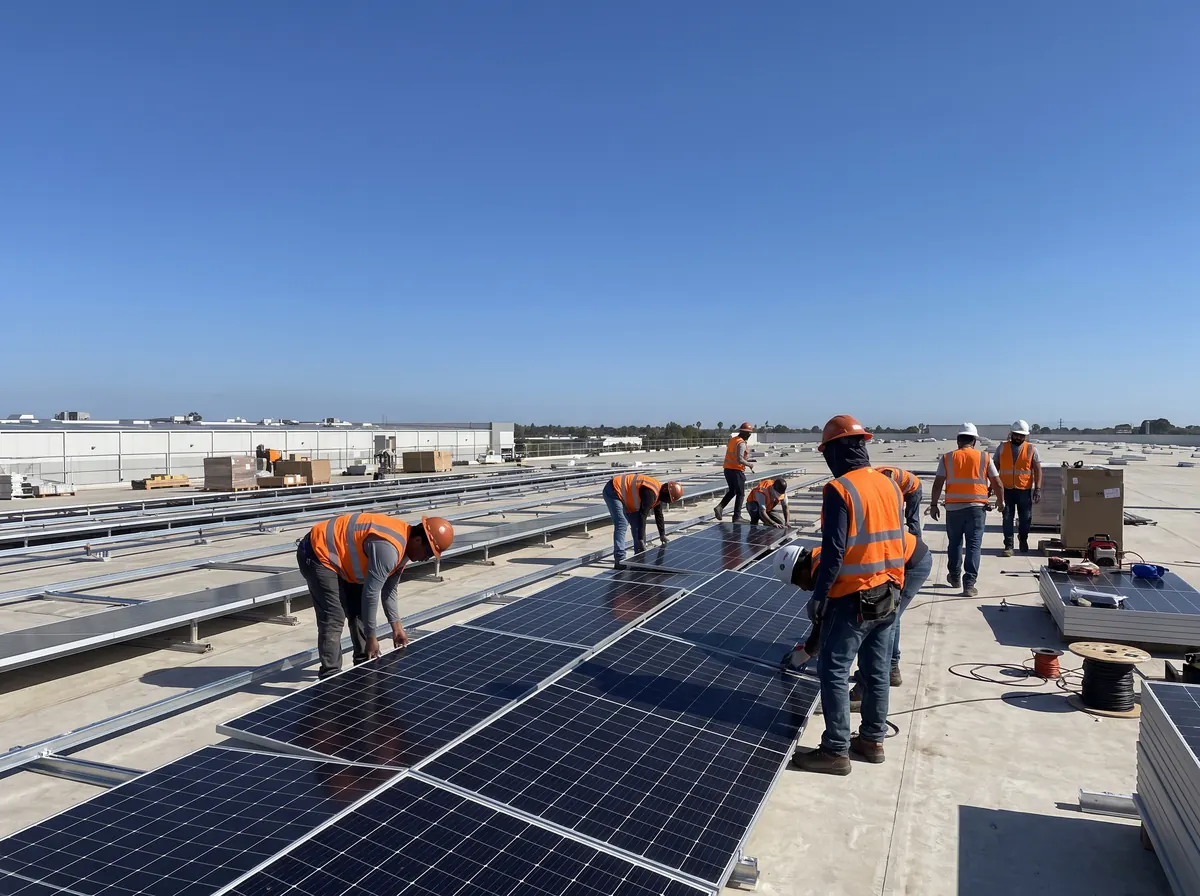
Yes. Many installers combine modules, microinverters and racking for several upcoming jobs on one shipment to lower freight per watt. Tell us how you want it staged and labeled.
Do you sell to small installers, or only large EPCs?
Both. A lot of our customers are independent and mid-size installers who need a pallet or two and a person who answers the phone. You get a named procurement specialist, not a ticket queue.
Will I work with the same person every time?
Yes. Your account has a dedicated procurement specialist who knows your projects and order history. Meet the team on the About page.
For Developers and Utilities
Bankability, documentation and timing for commercial, community and utility-scale projects.
Can you provide country-of-origin and FEOC documentation?
We provide the manufacturer documentation available for each product, such as country-of-origin and supply-chain paperwork. Requirements differ by project and lender, so tell us what your tax advisor or financier needs before you order and we will confirm, product by product, what we can supply. We do not certify a product’s tax-credit eligibility; your advisors make that call.
Do you carry domestic content products?
Some. Our inventory has included U.S.-made or U.S.-assembled options such as First Solar modules, U.S.-assembled JA Solar modules and domestic-content Enphase microinverters. Whether a project meets the domestic content bonus depends on the whole project’s cost ratios, not one component. Ask us what is available now and get your advisor’s sign-off.
What is the placed-in-service deadline for 48E projects?
Under current federal law, solar projects that began construction after July 4, 2026 must be placed in service by December 31, 2027 to claim the 48E credit. Projects that began construction earlier have longer continuity windows. Work back from your placed-in-service date when you schedule equipment delivery. Not tax advice; confirm with your tax counsel.
Can you schedule deliveries to match construction milestones?
Yes. For larger projects we can stage deliveries in phases, so modules, inverters and racking arrive when each crew needs them instead of all at once. Send us your construction schedule with the order.
Can you supply utility-scale volumes?
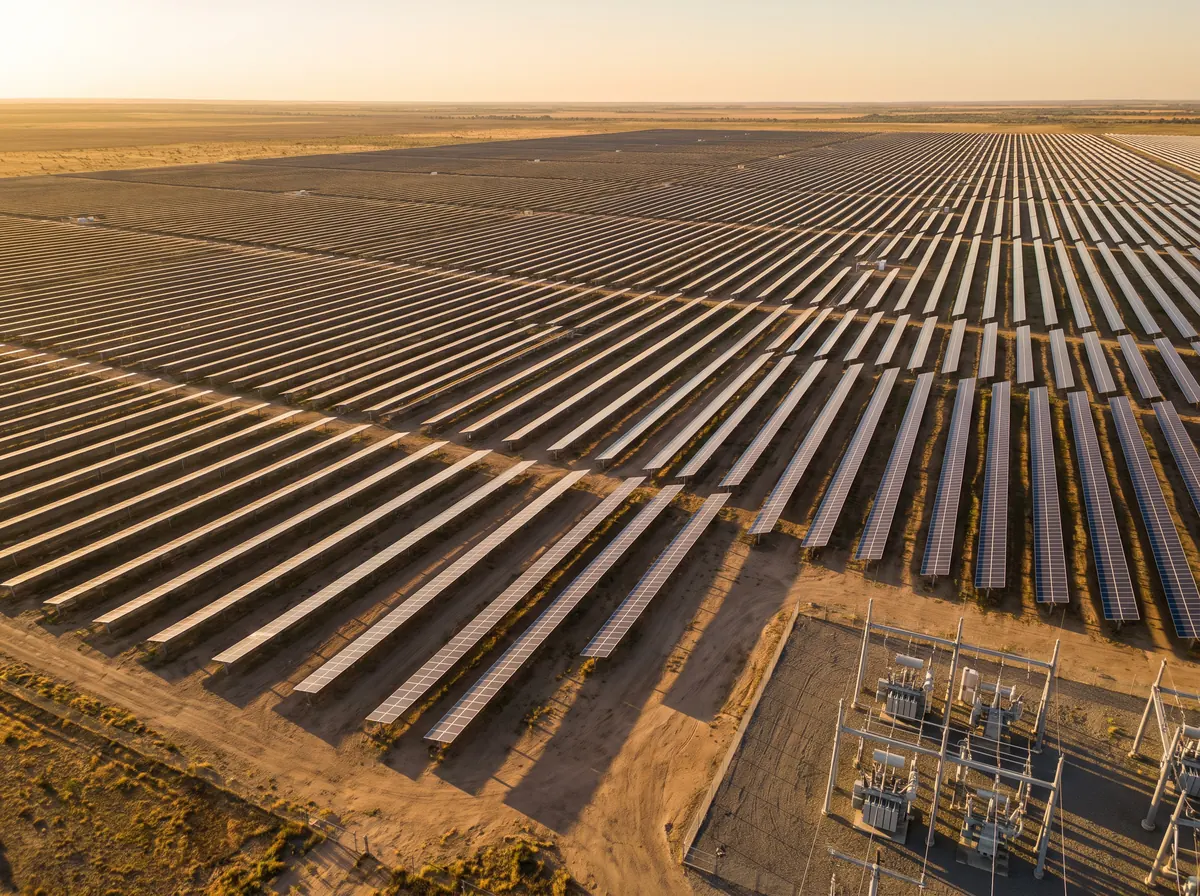
Yes. We source multi-megawatt quantities through manufacturer relationships and our partner network. Share the module spec, total MW, delivery window and bankability requirements, and we will come back with options. Start the conversation.

Surplus and Secondary Market
How new surplus equipment works, how we vet it, and how to sell your leftovers.
What is surplus or secondary-market solar equipment?
It is new equipment that changed hands before reaching a roof: project leftovers, cancelled orders, overstock and liquidations. It is not used or salvaged product. Buying it is often the fastest way to get a specific model at a fair price. Our founder discussed this market in Solar Power World.
Are surplus panels new, and do they come with a warranty?
We sell new, unused product. Manufacturer warranty coverage depends on the brand and how the product was originally sold, so we confirm the warranty status for each lot before you buy and give you the paperwork that comes with it.
How do you verify secondary-market inventory?
We confirm who controls the product, where it sits, its condition and packaging, and the exact model and wattage before we quote it. That is the same discipline our founder describes in the EnergyBin interview: if a broker cannot prove they control the product, do not send them money.
Can I sell you my leftover panels or equipment?
Yes. Contractors and developers sell us leftover pallets, cancelled orders and extra inverters. Email a list with model, quantity, condition and location to sales@alchemysolardistribution.com and we will tell you what it is worth and how fast it can move.
Is a solar broker the same as a distributor?
Not quite. A traditional distributor sells what it stocks. A broker connects buyers with product held elsewhere. We do both: we sell inventory we control and source from manufacturers and partners when you need something we do not have on hand.
2026 Tariffs and Pricing
What the December 4, 2026 module price floor means for your next order. Last updated October 22, 2026.
This section summarizes public policy as of October 22, 2026. It is not tax, legal or customs advice.
What changes for solar module imports on December 4, 2026?
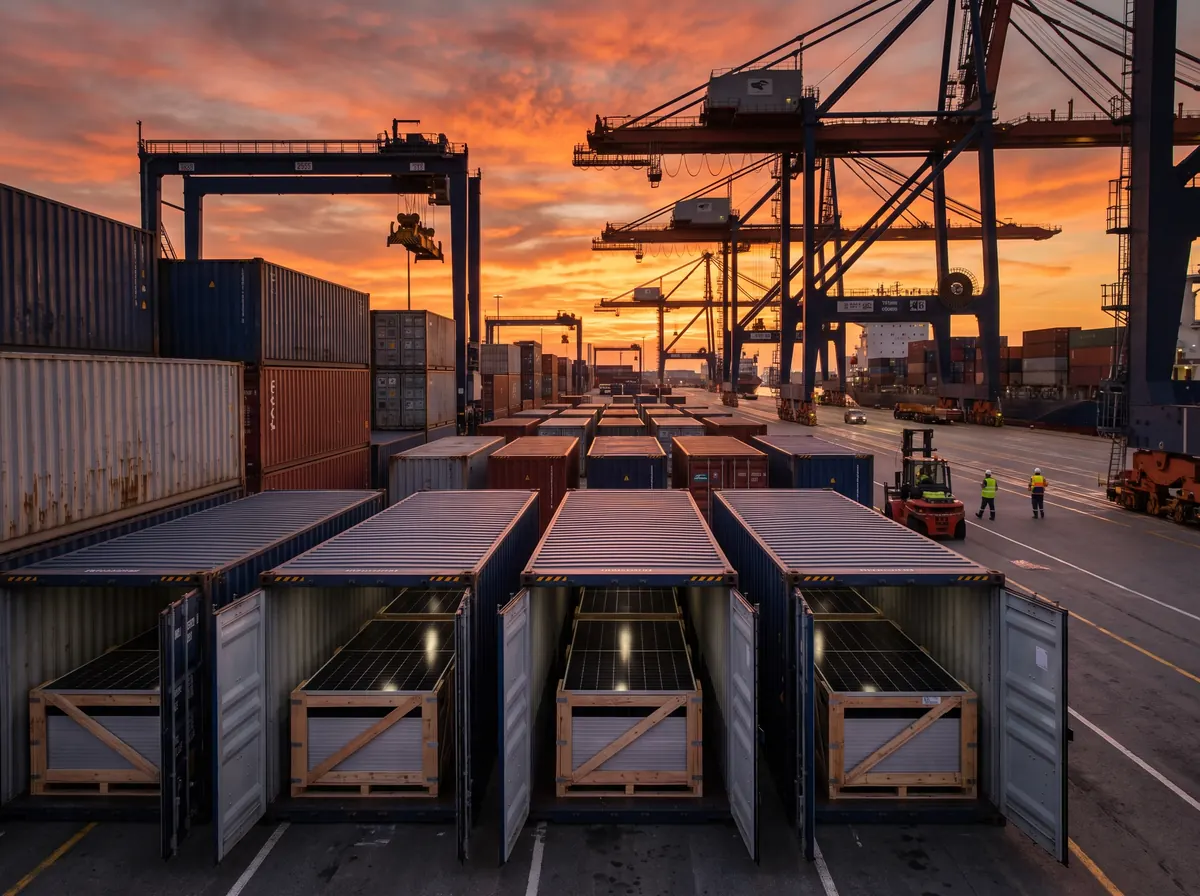
New Section 232 measures take effect: imported crystalline-silicon modules face a minimum import price of $0.38 per watt plus a 15% tariff, and imported cells face a $0.22 per watt floor plus 15%. Rates differ for some countries with trade agreements. Expect imported module prices to rise. This is a summary, not legal or customs advice.
Should I buy panels before the price floor takes effect?
If you have jobs scheduled for the first half of 2027, pricing and securing modules now is the lower-risk move. If your next job is a year out, there is less reason to rush. Either way, get a quote while current pricing is still available: request a quote or call (888) 805-3360.
Does the price floor apply to panels already in U.S. inventory?
The floor applies at the point of import. Product that already landed in the U.S. before December 4 was imported under earlier rules, which is why in-stock domestic inventory is the hedge many buyers are using. How regulators treat edge cases is still being clarified, so confirm specifics with your customs or legal advisor.
Are any modules outside the new Section 232 measures?
Industry analysis indicates First Solar’s thin-film (CdTe) modules fall outside the covered tariff codes because they are not crystalline silicon. U.S.-made cells and modules are also positioned differently. Ask us which non-covered or domestic options are available for your project.
How often do your prices change?
Module pricing moves with tariffs, freight and supply, and it is moving fast right now. Ask your procurement specialist how long your quote is held. We will tell you when a price is about to change rather than surprise you on the invoice.
No answer for that yet. Ask us directly: (888) 805-3360 or sales@alchemysolardistribution.com.
Still have a question?
Send your bill of materials or call a procurement specialist. You will get a real person who knows solar.